Regeneration of Kidneys by Stem Cells
Stem Cells What is a Stem Cell?
Stem Cell is a clonal, self-renewal entity that is multipotent and thus can generate several differentiated cell types. They are biological cells found in most of the multicellular organisms. Stem cells are basic currency of organ repair. The term "stem cell" by itself can be misleading. There are embryonic stem cells, adult stem cells, cancer stem cells, and reprogrammed iPS cells, each with very different potential to treat disease. Properties of Stem cells:
 Embryonic stem cells- Embryonic
stem cells are isolated from inner mass of blastocyst. A blastocyst is
an early stage embryo, approximately four to five days old. Adult stem
cells is found in various tissues. ES cells are pluripotenet and give rise during development to all derivatives of the three primary germ layers: ectoderm, endoderm and mesoderm. They do not contribute to the extra-embryonic membranes or the placenta. The endoderm is composed of the entire gut tube and the lungs, the ectoderm gives rise to the nervous system and skin, and the mesoderm gives rise to muscle, bone, blood—in essence, everything else that connects the endoderm to the ectoderm. Fetal Stem cells- The primitive stem cells located in the organs of fetuses are referred to as fetal stem cells. Reference: http://en.wikipedia.org/wiki/Adult_stem_cell http://www.cirm.ca.gov/about-stem-cells/stem-cell-basics/stem-cell-basics http://www.google.co.in/imgres/ |
Note: If not opening in internet Explorer, please kindly open the site in Mozilla Firefox 8.0 Adult Stem cells- These are the undifferentiated cells which are found throughout the body after development. They multiply by cell division to replenish dying cells and regenerate damaged tissues. They are also known as somatic stem cells and germline stem cells and are found in both children as well as adults. Adult stem cells have the ability to generate entire organ from few cells. The best part is that they are derived from adult tissues rather than destroyed human embryos which ultimately does not leads to any controversies. Pluripotent stem cells, i.e. cells that can give rise to any fetal or adult cell type, can be found in a number of tissues, including umbilical cord blood. Other adult stem cells are multipotent, meaning they are restricted in the types of cell they can become, and are generally referred to by their tissue origin (such as mesenchymal stem cell, adipose-derived stem cell, endothelial stem cell, etc.). A great deal of adult stem cell research has focused on investigating their capacity to divide or self-renew indefinitely, and their potential for differentiation
Amniotic Stem cells Amniotic stem cells are multipotent and can differentiate in cells of adipogenic, osteogenic, myogenic, endothelial, hepatic and also neuronal lines. These stem cells are very active, expand extensively without feeders and are not tumorigenic. Induced Pluripotent stem cells Induced Pluripotent stem cells, also called as iPS cells, are reprogrammed to give rise to pluripotent characteristics. They are derived from non-pluripotent cells- typically adult somatic stem cells, by inducing forced expression of specific genes. They are similar to ES cells. They do not lead to any controversies as they are derived from patient’s own somatic cells. 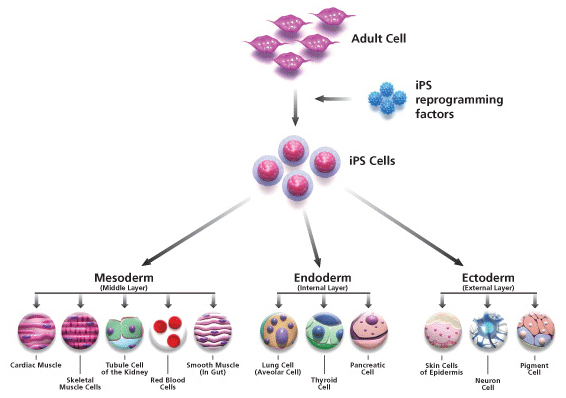 |
 .
.